
The After-Party Is Part of the Job: How Prague’s Event Photographers Navigate Late-Night Coverage
August 12, 2026
Video vs Photo at Prague Corporate Events: The Hybrid Coverage Model That’s Taking Over
August 14, 2026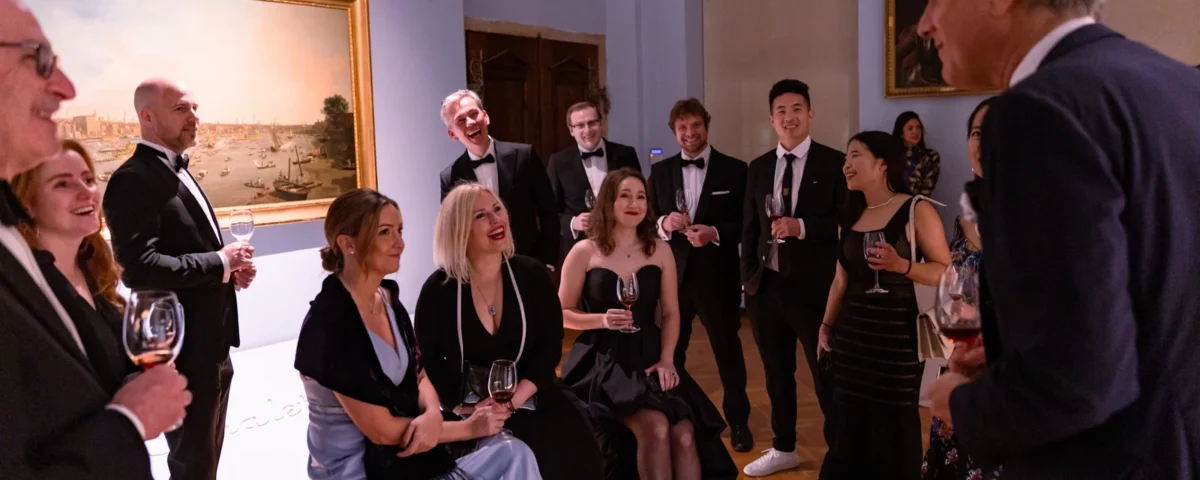
When it comes to Prague gala photography, most people assume the magic happens during the grand entrance, the speeches, or the final toast. But seasoned event photographers who have worked Prague’s historic ballrooms, baroque palaces, and five-star hotel venues know a hidden truth: the transition between courses is where the best gala photography actually unfolds. These fleeting, unscripted windows — lasting anywhere from four to twelve minutes — offer a rare convergence of relaxed subjects, dynamic movement, flattering ambient light, and genuine human connection that no posed portrait session can replicate.
The Hidden Golden Hour of Every Gala Event
In outdoor photography, the golden hour is sacred. At a Prague gala dinner, the equivalent moment arrives not at sunset, but the instant the main course plates are cleared. Guests shift in their seats. Conversations bloom across tables. Someone laughs a little too loudly. A bridesmaid finally approaches the couple she hasn’t spoken to all evening. These spontaneous micro-moments, unposed and unhurried, carry an emotional authenticity that staged photography simply cannot manufacture.
Why the Between-Course Window Is Photographically Unique
Three things happen simultaneously during course transitions that create near-perfect photographic conditions:
- Subjects relax their posture. The formality of the meal dissolves. Guests lean in, touch shoulders, share phones, and forget entirely that a camera exists in the room.
- Staff movement creates visual layers. Waitstaff gliding through Prague’s ornate dining rooms add depth, motion blur, and a cinematic quality to background compositions.
- Ambient candle and chandelier light peaks. As the evening deepens and overhead service lights dim, the warm glow of candlelight becomes dominant — producing that rich, painterly quality that Prague’s gilded interiors are famous for.
Prague’s Unique Venue Architecture Amplifies the Effect
Not every city can offer what Prague does. The interplay between Baroque ceiling frescoes, Art Nouveau ironwork, and modern warm-LED uplighting found in venues like Žofín Palace, the Municipal House, or the top-floor ballrooms of Prague’s five-star hotels creates a layered light environment that is extraordinarily forgiving and incredibly dramatic at the same time. During course transitions, when the room’s energy is at its most fluid, this architecture becomes a living backdrop.
Reading the Room: Venues Where This Effect Is Strongest
Experienced Prague gala photographers develop an intuitive understanding of each venue’s light behavior throughout the evening. In general:
- Baroque palace venues (Žofín, Lobkowicz) peak photographically between the appetizer and main course, when candlelight first begins to compete with overhead fixtures.
- Modern hotel ballrooms (Four Seasons, Mandarin Oriental) offer the most dynamic transitions after the main course, when programmable ambient lighting typically shifts to a warmer, softer setting.
- Rooftop and terrace venues benefit from a brief window where interior warmth and exterior city lights create a natural double-exposure effect visible through glass walls and doors.
The Psychology of Unguarded Moments
Gala events are inherently performative. Guests arrive dressed to impress, aware they are being observed. This social awareness creates a persistent, low-level tension that works against authentic photography throughout most of the evening. Course transitions are the great equalizer. The ritual of eating — a deeply human and equalizing act — briefly dissolves social armor. When plates are removed, guests are momentarily between performances. They are simply themselves.
This is the precise moment a skilled Prague event photographer is watching for: the exhale, the private smile, the spontaneous embrace. These images, when captured correctly, become the photographs clients return to again and again — not the perfectly posed group shots, but the candid frame where everything felt real.
The Technical Approach: How to Capture What Others Miss
Knowing when to shoot is only half the equation. The technical execution during these transitions requires deliberate preparation:
- Pre-position before the course ends. A professional Prague gala photographer monitors the kitchen rhythm and is already in position as the final plates of each course are served — not after clearing begins.
- Switch to a wider aperture prime lens. A 35mm or 50mm f/1.4 allows shooting at ISO 1600–3200 without introducing distracting flash, preserving the ambient atmosphere of the room.
- Move with the service staff, not against them. The natural pathways created by waitstaff provide cover and access simultaneously — allowing a photographer to move through the room invisibly.
- Prioritize emotional geography over technical perfection. A slightly soft focus on a perfectly timed laugh will always outperform a tack-sharp image of nothing happening.
Why Most Event Photographers Miss This Window Entirely
The uncomfortable truth in the Prague gala photography industry is that many photographers treat course transitions as a break. They review images on their cameras, eat a staff meal, or simply rest. This is understandable — gala events are physically demanding, often running six to eight hours. But it is also where the gap between good and exceptional event photography is created.
The photographers whose work stops couples mid-scroll on Instagram — the ones whose Prague gala portfolios look like editorial spreads rather than event documentation — are the ones who treat every course transition as a primary shooting window, not a pause.
Communicating This to Your Photographer Before the Event
If you are planning a gala event in Prague, this knowledge gives you a concrete, actionable conversation to have with your photographer during pre-event planning. Ask specifically:
- How do you use the time between courses?
- Are you familiar with the light behavior at our specific venue?
- Can I see examples from your portfolio that were taken during the dinner portion of a gala, not just during the program?
The answers to these questions will tell you more about a photographer’s experience level than their posed portrait work ever could.
The Role of Pre-Event Planning in Capturing These Moments
None of this happens by accident. The best gala photography in Prague is the result of meticulous pre-event preparation combined with in-the-moment instinct. Before the event, a professional photographer should:
- Walk the venue during setup to identify optimal positions for each phase of the evening
- Review the event timeline with the planner to understand the pacing of the menu
- Identify key guests and relationships in advance (who will seek out the couple between courses?)
- Discuss lighting changes with the venue’s AV or lighting team
This preparation transforms course transitions from accidental opportunities into predictable, repeatable moments of photographic excellence.
Frequently Asked Questions
How long do course transitions typically last at Prague gala events, and is that enough time for quality photography?
At most formal Prague gala events, the transition between courses lasts between five and fifteen minutes, depending on the venue, the number of guests, and the kitchen’s pacing. This is more than sufficient for an experienced photographer. In fact, many of the strongest images from a full evening are captured in a concentrated five-minute window. The key is being ready before the transition begins, not reacting after it has already started. A photographer who is positioned, focused, and reading the room can easily capture twenty to thirty meaningful frames in this window.
Does this approach work differently for corporate galas versus wedding receptions in Prague?
Yes, with some important distinctions. At corporate gala events, course transitions tend to produce more professionally guarded moments — the relaxation is subtler, and the most valuable images often center on networking energy, body language between colleagues, and the visual contrast between formal attire and relaxed posture. At wedding receptions, the emotional temperature is higher and the transitions tend to produce more overtly joyful, intimate, and sometimes tearful moments. Both are equally valuable photographically, but they require different compositional instincts and different approaches to moving through the room without disrupting the atmosphere.
Should couples request more photographers to specifically cover the dinner portion of their Prague gala event?
For events over 80 guests, a second photographer during the dinner service is genuinely valuable — not because one photographer cannot handle the room, but because the transition windows happen simultaneously across multiple tables. A second photographer allows simultaneous coverage of, for example, the couple’s table and the parents’ table during the same transition. For smaller, more intimate Prague gala events under 60 guests, a single highly experienced photographer who understands the venue and the timeline is typically sufficient. The quality of the photographer’s preparation and awareness will always matter more than the quantity of photographers present.
ProEventPrague.com’s Founders Tips by Kemal Onur Ozman
After photographing hundreds of gala events across Prague’s most prestigious venues, the single most valuable technical habit I have developed is what I call “the kitchen signal system.”
Before every event, I introduce myself to the head waiter or maître d’ and establish a simple non-verbal signal — typically a brief nod or a specific hand gesture — that tells me a course is about to be cleared. This gives me a 60 to 90 second early warning that the average photographer simply does not have. While other photographers are still reacting to the movement of plates, I am already in my chosen position, lens set, reading the faces in my target area of the room.
This single habit — which costs nothing and requires only two minutes of relationship-building before the event — is responsible for a disproportionate number of the strongest images in my Prague gala portfolio. The best photographs at any formal dinner are not taken during the dinner. They are taken in the breath between bites, in the pause between courses, in the moment when Prague’s extraordinary venues become a stage and your guests forget, just briefly, that they are performing.
Build relationships with the service team. They are your most valuable creative partners at any gala event.
— Kemal Onur Ozman, Lead Event Photographer & Co-Founder, ProEventPrague.com
Our services