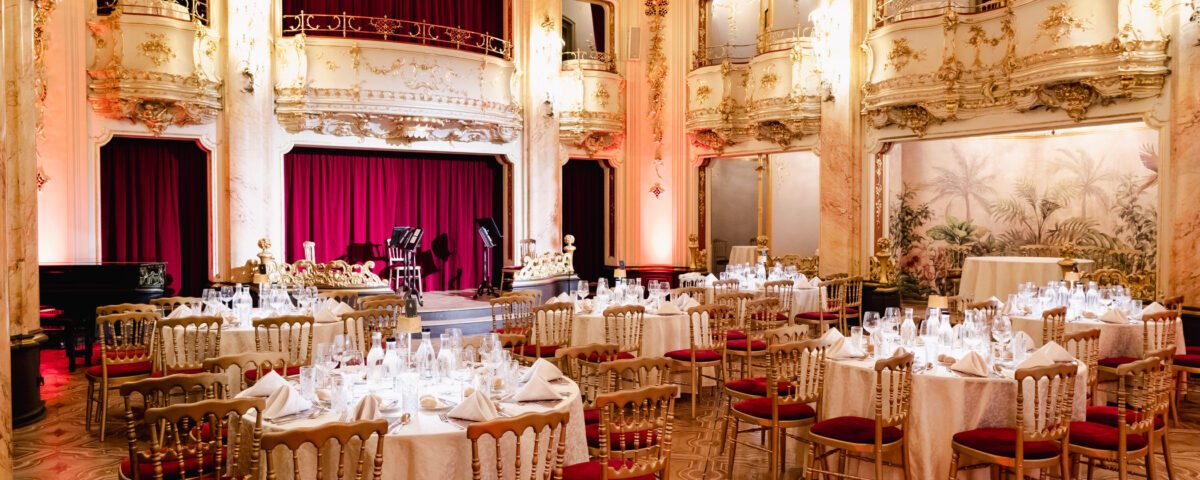
Corporate Interiors Are a Hidden Goldmine for Executive Portraits
March 23, 2026Why Candid Leadership Photography Is Redefining Corporate Identity
March 25, 2026
When it comes to photographing executive panels at Prague events, the challenge is both technical and psychological. A skilled conference photographer must navigate the delicate tension between capturing individual authority — the commanding presence of each leader — and the group dynamics that define the collective energy of a panel. Prague, with its dramatic architecture, world-class venues, and increasingly prominent role as a Central European business hub, provides a uniquely compelling backdrop for these moments. Whether you are organizing a corporate summit at the Municipal House or a tech conference at the Prague Congress Centre, understanding how to visually tell both stories — the individual and the collective — is what separates adequate event photography from truly exceptional work.
Why Executive Panel Photography Demands a Dual Visual Strategy
Unlike wedding photography or portrait sessions, executive panel photography operates under unforgiving constraints: limited time, fixed lighting conditions, and subjects who are focused entirely on their conversation — not on the camera. Yet the stakes are high. These images will represent brands, build personal authority, and document history.
The dual visual strategy — capturing both individual gravitas and group cohesion — is not a luxury. It is a professional necessity. Organizations use these photos across press releases, LinkedIn profiles, annual reports, and event recaps. A photograph that only shows the group risks losing the individual’s story. A photo that only captures a single speaker misses the collaborative narrative entirely.
The Business Value Behind Every Frame
Corporate clients investing in Prague event photography are not simply buying memories. They are investing in visual content assets that carry strategic weight. A well-composed image of a CEO addressing a panel communicates leadership. A photograph of four executives engaged in genuine conversation communicates culture, trust, and collaboration. Both have measurable business value — and both require entirely different photographic approaches.
Photographing Individual Authority: Making Every Executive Look Like a Leader
Capturing authority in a single frame requires more than pointing a lens at a well-dressed professional. It demands an understanding of light, angle, timing, and psychology.
Lens Choice and Distance
For individual executive portraits during panel sessions, a 70–200mm telephoto lens is a conference photographer’s most trusted ally in Prague venues. It allows you to work from a respectful distance without interrupting the natural flow of discussion, while still compressing the background beautifully and throwing distracting elements out of focus. The result is a portrait that feels intimate, powerful, and polished — without any staged artificiality.
The Decisive Moment of Expression
Henri Cartier-Bresson’s concept of the “decisive moment” applies profoundly here. An executive mid-sentence, eyes focused, hands slightly raised — that fraction of a second communicates conviction, intelligence, and presence far more powerfully than a posed smile. Train your eye to anticipate these moments rather than react to them.
Light Is Authority
In Prague’s most popular conference venues — from the baroque grandeur of Žofín Palace to the sleek minimalism of Cubex Centre — lighting conditions vary enormously. Side lighting sculpts facial features and creates a sense of depth and authority. Flat frontal lighting, conversely, flattens and diminishes. Arrive early, assess the light, and position yourself to use it rather than fight it.
Background Context Without Distraction
Prague offers extraordinary environmental storytelling. The hint of a vaulted ceiling, a conference banner with a recognizable logo, or a softly blurred audience in the background — these elements add context and credibility to executive portraits without competing for attention. Choose your background intentionally, even in a fast-moving panel environment.
Photographing Group Dynamics: The Art of Collective Storytelling
A panel is more than the sum of its individuals. The relationship between panelists — their eye contact, body language, spatial arrangement, and moments of agreement or debate — tells a rich organizational and human story.
Wide Establishing Shots: Setting the Stage
Every panel photography series should begin with wide establishing shots that communicate the full visual landscape: the stage, the panelists, the moderator, the backdrop, and ideally a sense of the audience. In Prague’s architecturally distinctive venues, these wide shots carry particular power. They root the image in place and provide essential context for editorial use.
Reading the Room: Anticipating Interaction
Group dynamics are most visually compelling when panelists are genuinely interacting — turning toward each other, laughing, nodding, or leaning in with focus. These authentic interaction moments are photographic gold, and they cannot be manufactured. They must be anticipated. Experienced conference photographers in Prague learn to read the rhythm of panel discussions: when a debate is building, when consensus is forming, when a moment of levity is approaching.
The Rule of Thirds Meets Boardroom Psychology
When composing group panel shots, apply the rule of thirds with psychological awareness. Place the most senior or currently speaking panelist on a strong compositional axis while ensuring other participants remain visually present and dignified. Never crop out a panelist’s face awkwardly — it communicates visual dismissal, which no communications team will appreciate.
Capturing the Moderator as Visual Anchor
The moderator is often overlooked in conference photography, yet they serve as the visual thread connecting the panel. Their gestures when introducing a speaker, their listening expressions during a response, and their ability to physically unify the group are all narratively important. Include the moderator meaningfully in your group compositions.
Technical Settings for Prague Conference Photography
Prague’s conference venues present a range of technical challenges that require specific photographic preparation.
Exposure and ISO Management
Many Prague venues combine mixed lighting sources — tungsten stage lighting, LED panels, and natural light from period windows — creating complex white balance challenges. Shoot in RAW format without exception. Use Auto ISO with a ceiling of 6400 on modern full-frame cameras, and prioritize a shutter speed of at least 1/200s to eliminate motion blur from animated speakers.
Silent Shooting Mode
In high-level executive panels, discretion is paramount. Enable your camera’s silent or electronic shutter mode whenever possible. The sound of a mechanical shutter during a quiet, intense moment can be deeply disruptive — and may earn you a disapproving glance from a CEO that no photographer wants.
Dual Camera Bodies: The Professional’s Advantage
Working with two camera bodies simultaneously — one with a telephoto for individual moments, one with a medium zoom (24–70mm) for group dynamics — eliminates the need to change lenses under time pressure. In a fast-moving Prague executive summit, missing a decisive moment while changing glass is an avoidable professional failure.
Post-Processing: Maintaining Individual Identity Within a Cohesive Series
The editing phase is where the dual visual strategy must be maintained with discipline. Each individual executive portrait should be color graded consistently so that no single person appears more favorably lit than another — a subtle political consideration that experienced corporate photographers understand deeply. Group shots should be processed to ensure every face is clearly legible, even in challenging lighting.
Deliver both categories — individual authority portraits and group dynamic images — as clearly organized, separately labeled collections. Communications teams need to quickly locate the right image for the right use case. Organization is professionalism made visible.
Frequently Asked Questions
How many photographs should a professional photographer deliver from a full-day executive panel event in Prague?
For a full-day executive conference with multiple panel sessions in Prague, a professional photographer should deliver between 300 and 600 carefully edited images. This should include a balanced mix of wide establishing shots, individual executive portraits, group dynamic photographs, audience reaction shots, and contextual environmental images. Quality always supersedes quantity — each delivered image should be purposeful and usable, rather than overwhelming the client with marginally different variations of the same frame.
How should a Prague event organizer brief their conference photographer before an executive panel session?
An effective pre-event brief should include: a full list of panelists and their roles (so the photographer understands organizational hierarchy), the schedule and duration of each panel, any specific VIPs who require priority coverage, the intended use of the photographs (press, internal communications, social media), and any restrictions such as no-photography moments or confidential materials on screen. Sharing a floor plan or stage layout in advance allows the photographer to plan optimal shooting positions before the event begins.
What makes Prague a particularly distinctive backdrop for executive panel photography compared to other European cities?
Prague offers a rare combination of architectural grandeur and modern conference infrastructure that few European cities can match. The juxtaposition of baroque and Art Nouveau venues alongside contemporary congress centres creates visual contexts that communicate both tradition and innovation — qualities that many executive brands actively want to associate with. Additionally, Prague’s warm, golden-toned interior lighting in historic venues adds a natural richness to executive portraits that requires minimal post-processing enhancement, making the photographer’s technical work both easier and more aesthetically rewarding.
ProEventPrague.com’s Founders Tips by Kemal Onur Ozman
The Silent Pre-Panel Scout: A Ritual Every Conference Photographer Must Adopt
Here is something most photographers never talk about — and it is one of the highest-leverage habits I have developed over years of shooting executive events across Prague and Central Europe.
Arrive at the venue at minimum 45 minutes before any panel begins, and do your entire shoot in your mind before a single executive walks on stage. Stand at every position you intend to shoot from. Look through your lens. Note exactly where the stage lighting creates hot spots that will blow out a forehead. Identify the one seat on the panel where a microphone stand will consistently obscure a face at 135mm but not at 200mm. Find the angle where Prague’s stunning venue ceiling becomes a compositional asset rather than a distraction.
Then — and this is the part most photographers skip — speak briefly to the AV team. Ask them whether any spotlights will be moved or dimmed during the session. Ask whether presentation slides will be displayed, and how bright those screens will be relative to the stage lighting. In Prague conference venues, I have saved entire sessions worth of properly exposed faces simply because I knew in advance that the LED screen behind the panel was going to be four stops brighter than the key light on the speakers.
The executives on stage are prepared. The moderator is prepared. The professional conference photographer must be equally, if not more, prepared — because unlike the speakers, we do not get a second take.
— Kemal Onur Ozman, Founder, ProEventPrague.com