

The Annual Report Shot List: What Prague’s Corporate Clients Need But Never Ask For
July 18, 2026
Group Photography for 200-Person Corporate Events in Prague — Without the Chaos
July 20, 2026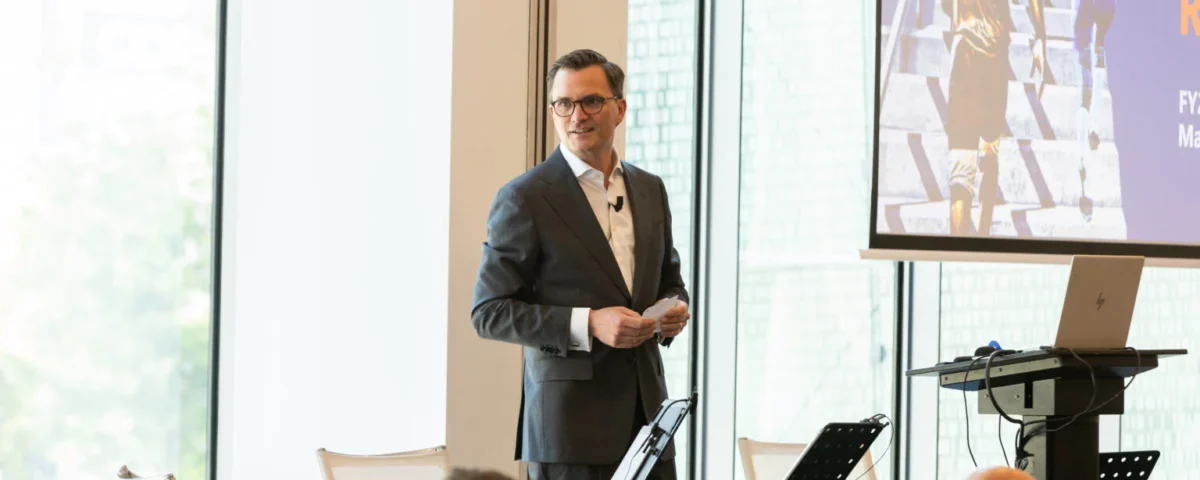
When the spotlight hits the podium and a speaker steps forward to address hundreds of attendees, stage photography at Prague conferences becomes both a technical challenge and an artistic opportunity. Capturing that precise moment — the commanding gesture, the illuminated face against a dark auditorium, the energy of a keynote presentation — requires a deep understanding of conference exposure techniques that go far beyond simply pointing a camera at a stage. Prague, with its world-class venues and vibrant international event scene, demands photographers who can master light, shadow, and split-second timing with equal confidence.
Understanding the Unique Lighting Challenges of Prague Conference Stages
Conference stages in Prague — from the grand halls of the Prague Congress Centre to the intimate event spaces in Žižkov or Vinohrady — present some of the most demanding exposure scenarios a photographer will ever face. The fundamental problem is contrast: a brightly lit speaker against a dark background, or a presenter standing in front of a blazing LED screen that outshines everything else in the room.
The Problem of Mixed Light Sources
At a typical Prague conference, you are rarely working with a single, consistent light source. You may encounter:
- Warm tungsten spotlights focused on the speaker
- Cool LED screen glow backlighting the subject
- Ambient hall lighting casting soft fill across the audience
- Flash from other photographers or event videographers
Each of these sources carries a different colour temperature and intensity. Without careful exposure management, your images will either be blown-out highlights on the screen or underexposed faces lost in shadow. Neither result serves your client.
Why Auto Exposure Fails on Stage
Camera metering systems are designed for average, balanced scenes. A conference stage is anything but average. When your camera meters a dark auditorium with a single bright figure on stage, it will almost certainly overexpose the speaker, attempting to brighten the surrounding darkness. Manual exposure or exposure lock is not optional — it is essential for consistent, professional results.
The Essential Exposure Triangle for Stage Photography
Mastering exposure in low-light, high-contrast conference environments means deeply understanding how ISO, aperture, and shutter speed interact under pressure.
ISO: Pushing the Limits in Dark Auditoriums
Modern full-frame cameras have made ISO performance genuinely extraordinary. In Prague conference settings, working at ISO 1600 to ISO 6400 is entirely normal. The key is knowing your specific camera body’s noise threshold — the point where grain becomes distracting rather than acceptable. On a Sony A7 IV or Nikon Z6 III, ISO 3200 will produce clean, printable images. On older crop-sensor bodies, you may need to be more conservative.
Do not fear ISO. Fear a blurry, unusable image captured at an unnecessarily low ISO. A sharp image with controlled grain will always serve your client better than a soft image with clean shadows.
Shutter Speed: Freezing the Speaker Without Blur
Speakers move. They gesture emphatically, turn their heads, pace the stage. A shutter speed that is too slow will render these natural movements as motion blur, ruining an otherwise perfect frame. As a general rule for conference stage photography:
- 1/200s or faster for active, gesturing speakers
- 1/125s as a minimum for relatively still presenters
- Be aware of screen flicker — LED screens refresh at specific rates, and certain shutter speeds will create banding artifacts across your image
In Prague venues with large projection screens, a shutter speed of 1/100s or 1/50s typically avoids banding with standard European 50Hz electrical systems. Test before the event begins.
Aperture: Balancing Depth of Field and Light
A wide aperture is your best friend on a dark stage. Prime lenses shooting at f/1.8 or f/2.8 will gather significantly more light than a zoom lens at f/5.6. However, shooting wide open comes with risks: at f/1.8, your depth of field is razor-thin. A speaker who moves forward even slightly may drift out of focus.
The practical sweet spot for most conference stage situations is f/2.0 to f/2.8, which provides enough light-gathering capability while maintaining a workable depth of field. If you are positioned far from the stage — as is common in larger Prague congress venues — depth of field increases naturally with distance, giving you more margin for error.
Choosing the Right Lens for Prague Conference Photography
Lens selection is arguably as important as exposure settings when shooting stage photography at Prague conferences.
The Workhorse: 70-200mm f/2.8
If you can only bring one lens for conference stage work, a 70-200mm f/2.8 is the near-universal choice among professionals. It provides the reach needed to capture tight headshots and expressive portraits from the back of a room, while f/2.8 gives you the light-gathering power essential for dim stage conditions. Image stabilisation — particularly valuable in handheld situations — makes this lens even more effective.
The Creative Option: 85mm or 135mm Prime
For smaller venues or for photographers who prefer a more intimate, editorial approach, an 85mm f/1.4 or 135mm f/1.8 prime delivers stunning subject isolation and exceptional low-light performance. The narrow depth of field creates beautiful background separation, making speakers appear to emerge dramatically from the stage environment. This is a particularly compelling aesthetic for executive portraits and keynote documentation.
Wide-Angle Lenses for Context and Atmosphere
Do not neglect the 24-70mm f/2.8 or a wider prime for establishing shots. An image that shows the full stage, the audience, the venue architecture, and the atmosphere of a Prague conference tells a complete story. These wide-angle frames are invaluable for event reports, social media content, and editorial use. Alternate between wide context shots and tight speaker portraits to deliver a comprehensive photo story.
Positioning and Access: Strategy Before You Shoot
Technical mastery means nothing if you cannot get into the right position to capture the defining moments of a conference.
Arrive Early and Study the Stage
Arrive at the venue at least one hour before doors open. Walk the stage. Understand where spotlights are focused. Identify which side of the podium is better lit. Note where screens will be positioned relative to the speaker — this determines where backlighting will be a problem. Photograph the empty stage and check your histogram to establish baseline exposure settings.
Work With Event Organisers
In Prague’s professional conference circuit, event organisers often have strict protocols about photographer movement during sessions. Introduce yourself to the event coordinator, explain your working style, and ask about permitted movement zones. Restricted shooting positions are common — work creatively within them rather than against them. A photographer who respects venue rules builds long-term relationships with Prague event organisers.
The Side Angle Advantage
Shooting from the side of the stage rather than dead-centre often produces more dynamic, compelling images. A slight angle reveals depth — the microphone, the lectern, the backdrop — and adds three-dimensionality to what would otherwise be a flat, frontal portrait. Whenever access permits, explore 30 to 45-degree side positions for your primary shooting angle.
Post-Processing Conference Stage Images: Exposure Recovery and Colour
Even perfectly exposed images will benefit from thoughtful post-processing, particularly in environments as challenging as conference stages.
Working with RAW Files
Shooting RAW is non-negotiable for professional conference photography. RAW files preserve far more highlight and shadow detail than JPEGs, giving you significantly more latitude to recover blown highlights from LED screens or lift shadowed faces. In Adobe Lightroom or Capture One, a properly exposed RAW file from a conference stage can typically withstand one to two stops of exposure adjustment in either direction without visible quality loss.
Colour Grading Mixed Light Sources
Mixed colour temperatures are best addressed during the shoot using a custom white balance card, but they can also be managed effectively in post. The HSL (Hue, Saturation, Luminance) panel in Lightroom is particularly useful for correcting the orange cast of tungsten stage lighting on skin tones while preserving the cool blue of screen glow in the background — creating a natural, balanced, professional result.
Frequently Asked Questions
What is the best camera setting for stage photography at a Prague conference with a bright LED screen behind the speaker?
The most effective approach is to use spot metering aimed directly at the speaker’s face rather than allowing the camera to evaluate the entire scene. Set your exposure manually after taking test shots and reviewing the histogram. A typical starting point in this scenario might be ISO 1600, f/2.8, and 1/160s — adjusting from there based on actual stage lighting. Shooting RAW allows you to recover blown screen highlights in post-processing without losing face detail. Additionally, be mindful of LED screen refresh rates: use a shutter speed of 1/100s or 1/50s in European venues running on 50Hz power to avoid horizontal banding across the screen.
Is it acceptable to use a flash or speedlight during conference stage photography in Prague?
In most professional Prague conference settings, direct flash is strongly discouraged and often explicitly prohibited during presentations, as it distracts speakers and disrupts the audience experience. The preferred approach is to work entirely with available stage lighting, using a fast lens and high ISO. If you require supplemental light — for example, during networking breaks or portrait sessions — a diffused, bounce flash or a portable LED panel can be used discreetly. Always confirm flash policies with the event organiser before the event begins.
How do I protect my conference stage images from being stolen or misused after delivery?
Protecting your conference photography involves both legal and technical measures. First, ensure your contracts clearly define usage rights, specifying who may use the images, for what purposes, and for how long. Embed your copyright information in EXIF metadata using Lightroom or Capture One before delivery. For online use, deliver web-resolution files (typically 1500 to 2000 pixels on the longest edge) with visible or invisible watermarks as appropriate. For Prague-based clients delivering content internationally, registering your copyright with a national intellectual property office provides additional legal protection in case of infringement disputes.
ProEventPrague.com’s Founders Tips by Kemal Onur Ozman
After years of photographing conferences, summits, and corporate events across Prague and throughout Europe, there is one insight I wish someone had told me far earlier in my career: the most dangerous moment for exposure at any conference stage is not the keynote — it is the transition.
When a speaker walks from the wings onto a stage, or when the lighting operator switches from a wide wash to a tightly focused spotlight, your previously perfect exposure settings can become completely wrong within a single second. Experienced stage photographers develop what I call “anticipatory exposure awareness” — you read the lighting cues before they happen.
Here is my practical system: I always keep one finger hovering near my ISO dial and watch the lighting operator or the side-stage monitor if one is visible. When I see a speaker being introduced, I adjust my exposure before they step into the main light, not after. I also shoot a quick burst of the empty podium the moment spotlights activate — this gives me a histogram reference specific to that exact lighting state, before any speaker or background complexity enters the frame.
Additionally, in Prague venues specifically, I always ask the technical crew one question before every event: “What is the screen brightness level set at today?” Many venue AV teams adjust screen output based on ambient light conditions, and a screen running at 80% brightness versus 100% can mean the difference between a recoverable highlight and a completely blown-out background. That single question has saved hundreds of frames across dozens of events.
Prague is a city that rewards those who prepare. Its conference stages are magnificent, its audiences are international, and the stories told on those stages deserve to be photographed with the precision and artistry they command. Master your exposure, know your light, and never stop studying the stage before you shoot it.
— Kemal Onur Ozman, Founder, ProEventPrague.com